 MugiPocketNews

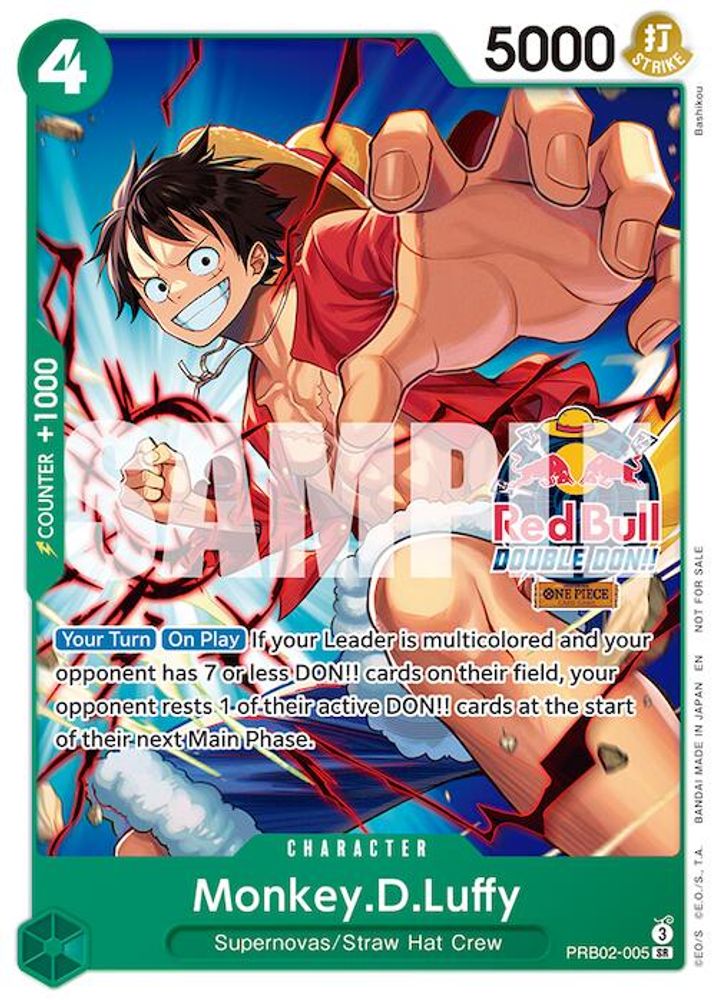
Grading feels like a coin flip with a big payout, so most collectors treat it like one: send the shiniest card and hope. It is not a coin flip. It is four numbers, and once you have all four the decision usually makes itself. We will walk through them with the most extreme example in the game right now, the Red Bull Double DON!! Winner Luffy PRB02-005, a tournament prize card that trades around $7,900 raw.
Number one: the spread
The spread is the PSA 10 price minus the raw price. It is the only number most people look at, and on its own it is misleading, because a big spread on a card with a low gem rate is a trap. For the Red Bull Winner the spread is enormous, well over eight thousand dollars, which is exactly why it deserves the other three numbers.
Number two: the gem rate
The gem rate is the share of submissions that came back PSA 10. It is public in the population report and it changes the expected value more than anything else. A card with a 90% gem rate turns the spread into near certainty; a card with a 40% gem rate turns it into a gamble where more than half of your submissions come back as a PSA 9 worth a fraction of the 10. Modern One Piece prints are usually generous, but the promo and prize cards that get handled at events are not, and the Red Bull Winner's report shows only a handful of copies outside the top grade because so few exist at all.
Number three: the fee, at the right service level
PSA prices its service by the card's declared value, so a $7,950 card cannot be sent at the $25 bulk tier. The correct fee is the tier that matches the value, and on a card like this it runs to several hundred dollars, sometimes closer to a thousand once shipping and insurance are added. That is still small next to the spread, but it is the number that kills the math on mid priced cards, where a $50 fee on a $120 spread with an 80% gem rate leaves almost nothing.
Expected gain = gem rate times PSA 10 price, plus the rest times PSA 9 price, minus the raw price, minus the fee. If that is not clearly positive, do not send it.

Your vault updates with daily prices; Mugi Vision checks a card in seconds.
Number four: time
A submission ties up the card for weeks to months, and prices move while it is away. On a card that has been sliding, the graded price you calculated in September is not the one you sell into in December. On a card that is stable or rising, time works for you. This is why the price history matters as much as the population report.
The three outcomes
- Clear yes: spread large, gem rate high, card stable or rising. Most manga art chase cards with a high gem rate sit here.
- Clear no: spread smaller than three times the fee, or gem rate under 60%. Most $30 to $80 alternate arts sit here, and grading them is a hobby, not an investment.
- Only if you keep it: big spread but low gem rate. Grade for the slab and the protection, not for the flip.
The Red Bull Winner is a clear yes on the numbers and a clear keep in practice: with 57 copies graded in total, anyone who owns one is holding one of the rarest prize cards in the game, and the slab is as much about protecting it as about the price.